
Senior Mobility
Knee Strengthening Exercises for Seniors
Six gentle knee strengthening exercises for seniors to build the muscles that support and protect the knees — chair-based and low-impact, with no equipment needed.
Written and reviewed by the StretchPartner team. Educational content only — not medical advice.
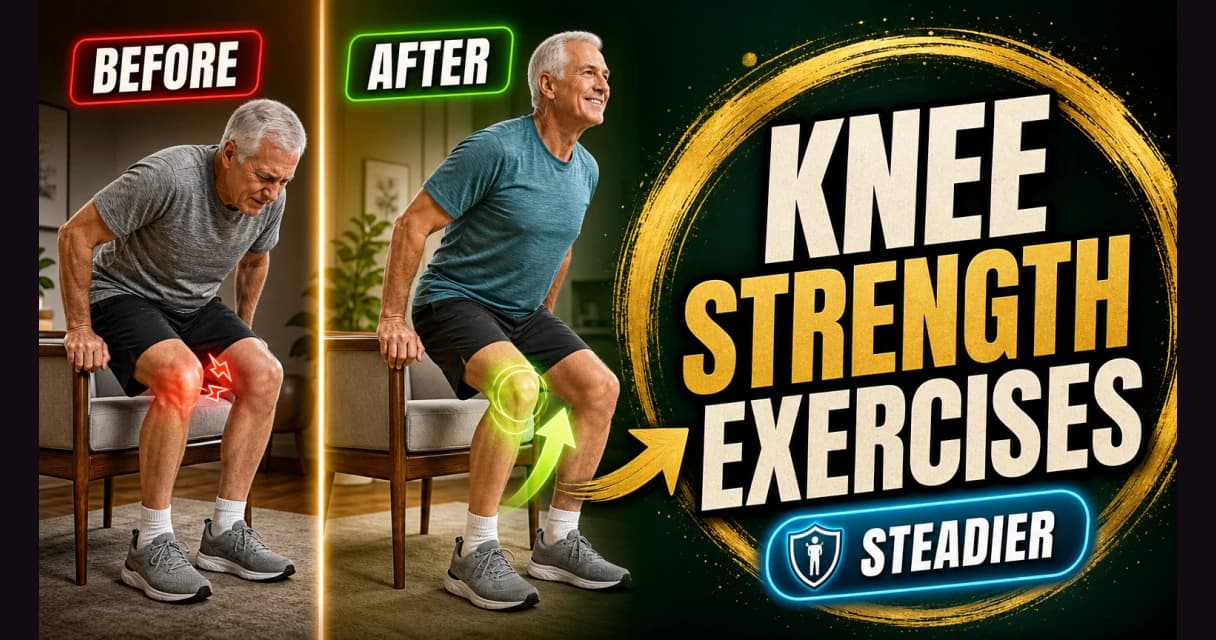
Knee pain in later life is usually less about the joint itself and more about the muscles around it. When the quads, glutes, and calves are strong, they share the load and the knee feels supported and steady; when they weaken, the knee takes the strain. These gentle knee strengthening exercises for seniors rebuild that support with low-impact, mostly chair-based moves — no weights, no deep bending, no equipment.
Strengthening is different from stretching: you are working the muscles, so a little effort is good, but it should never be sharp knee pain. For a plan built around your knees and balance, take the free 2-minute quiz.
 Before
 After
AfterWhy knees get weak and achy with age
Less daily activity means the muscles that protect the knee — especially the quadriceps on the front of the thigh and the glutes — gradually lose strength. A weaker thigh lets the kneecap track poorly and the joint absorb more shock, which shows up as aching, stiffness, or that uncertain feeling on stairs. The fix is gentle, consistent strengthening, which research consistently shows reduces knee pain and improves function.
6 gentle knee strengthening exercises
Sit-to-Stand
Glute Bridge Hold
Heel Raises
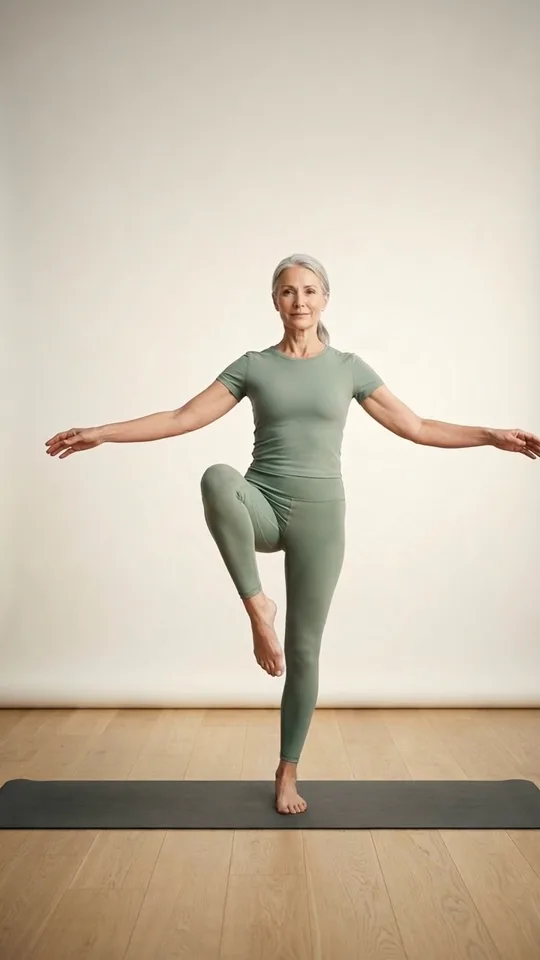
Single-Leg Balance
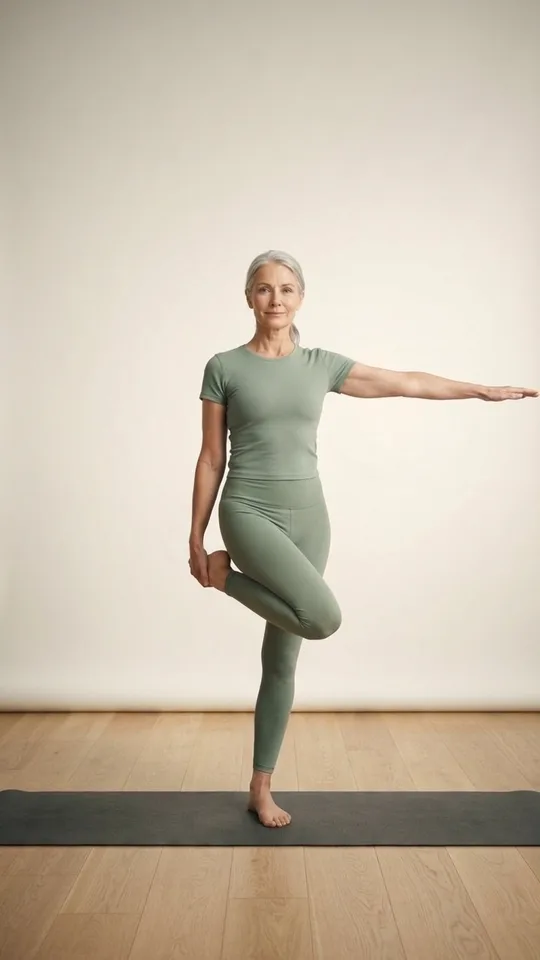
Standing Quad Stretch
Rest timer — pause 30 seconds between sets
Press start when you’re settled.
1. Sit-to-stand
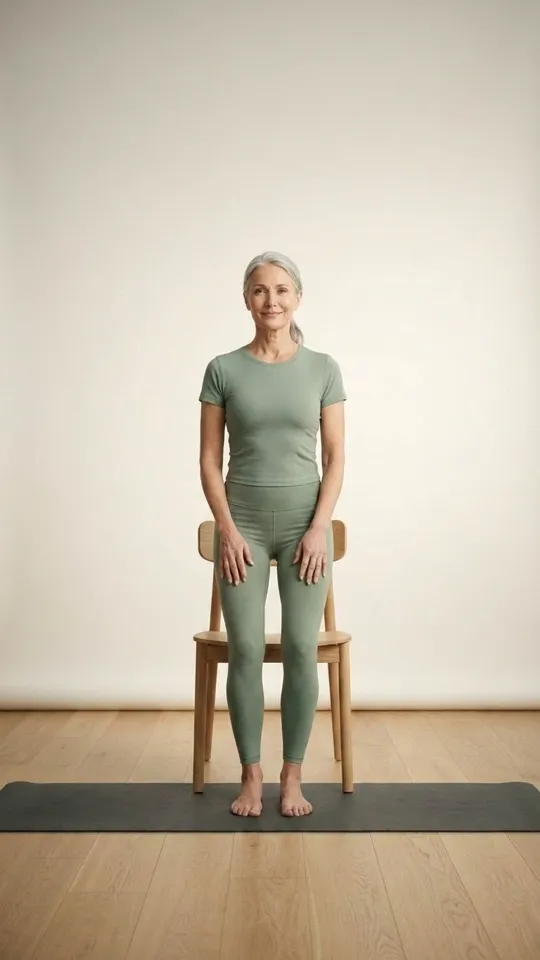
The single best knee exercise for seniors. Sit tall on the front of a sturdy chair, lean forward, and stand up slowly using your legs — then lower back down with control. Do 8 to 12, resting as needed. It strengthens the quads and glutes in exactly the pattern you use all day. Use your hands on the armrests if you need to.
2. Seated knee extensions
Sitting tall, slowly straighten one knee until the leg is out in front of you, hold for 2 seconds, and lower with control. Do 10 each leg. This isolates the quadriceps — the muscle most responsible for a stable, pain-free knee — without any impact.
3. Glute bridge hold
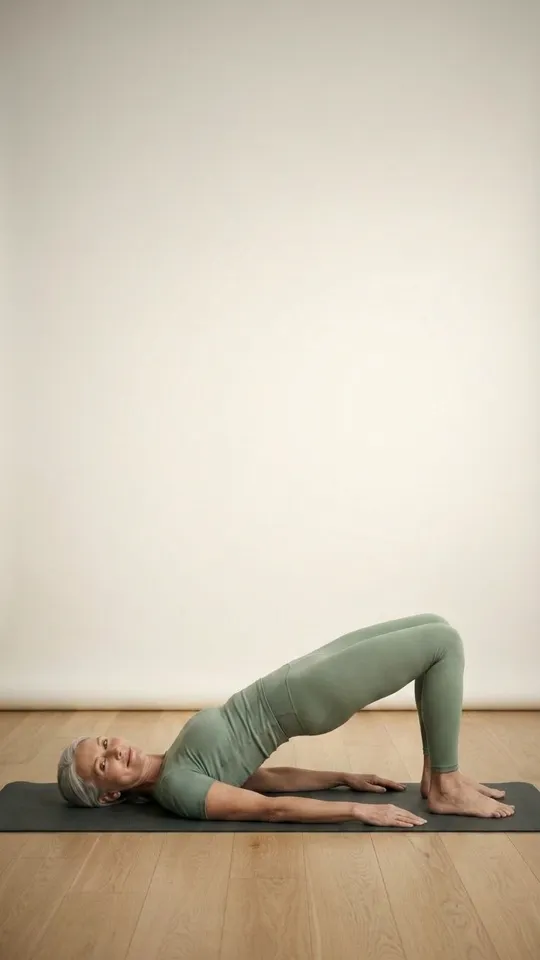
Lie on your back, knees bent, feet flat. Press through your feet and lift your hips until your body is in a gentle line, hold a few seconds, then lower. Do 8 to 10. Strong glutes take load off the knees and steady the whole leg.
4. Heel raises
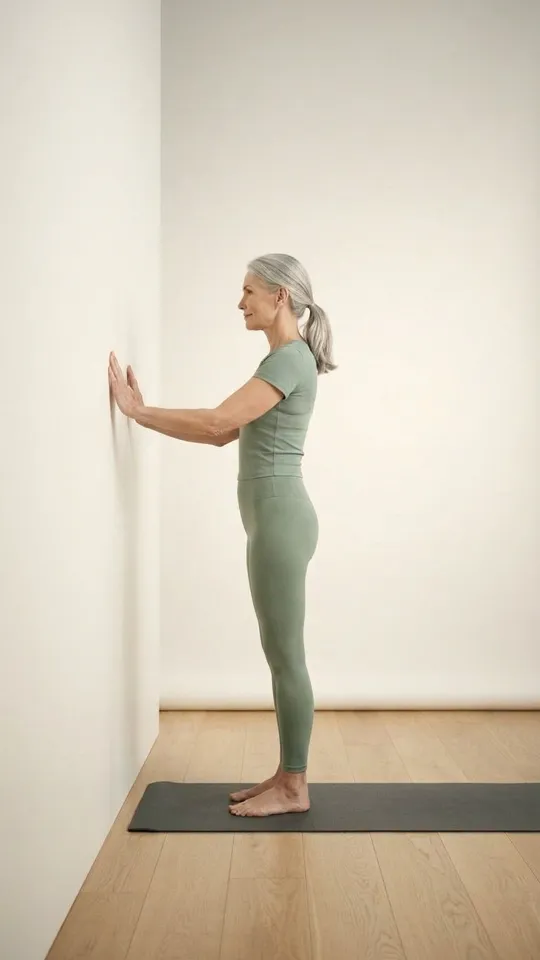
Holding a wall or chair, rise onto the balls of both feet, then lower your heels slowly. Do 10 to 15. Strong calves help absorb shock and support the knee through every step and stair.
5. Standing single-leg balance
Stand tall near a counter, lift one foot slightly off the floor, and balance on the other leg for 10 to 20 seconds. Keep support within reach. Balance work trains the small stabilizing muscles that keep the knee tracking correctly.
6. Standing quad stretch (to finish)
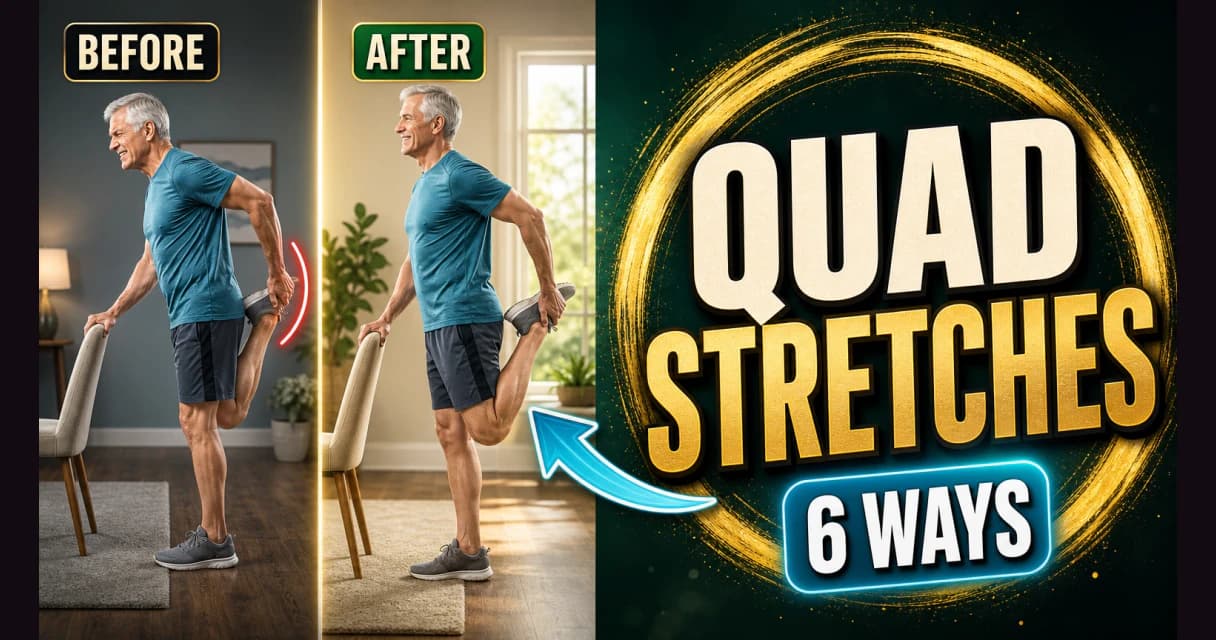
After strengthening, gently stretch the front of the thigh: hold a chair, bend one knee, and hold the ankle behind you, keeping the knees close. Hold 20 to 30 seconds each side. Loose quads plus strong quads is the combination happy knees love. For more, see our quad stretches guide.
How often should seniors strengthen their knees?
Aim for these 3 or 4 days a week, with a rest day in between — muscles get stronger during recovery, not just during the work. Start with one set of each and build up gradually. Consistency over a few weeks is what brings stronger, steadier, less achy knees.
When to check with a doctor
Gentle strengthening is safe and helpful for most everyday knee aches, but check with your doctor or a physical therapist first if you have significant swelling, a knee that gives way or locks, recent injury or surgery, or pain that is sharp rather than a mild working effort. Stop any move that causes sharp joint pain.
Related guides


For follow-along video and a knee-friendly routine, browse the knee stretches and strengthening collection, or get a personalized plan with the free 2-minute quiz.
Frequently asked questions
+ How do you strengthen weak knees in seniors?
Gentle, supported moves work best — sit-to-stands, straight-leg raises, seated leg extensions, and calf raises. Building the muscles around the knee (especially the quads) takes pressure off the joint and improves stability. Aim for most days of the week.
+ What is the best exercise to strengthen knees?
The sit-to-stand and the straight-leg raise are two of the most effective and joint-friendly for seniors. Both build the quadriceps that support and protect the knee, without deep bending.
+ What makes bad knees worse?
Common mistakes are deep squats or lunges that overload the joint, doing too much too soon, ignoring pain, and skipping warm-ups. Gentle, gradual strengthening — not avoidance — is what protects bad knees.
+ Are knee-strengthening exercises safe for seniors?
Gentle, controlled exercises are generally safe and recommended for keeping knees strong. Move within a pain-free range and stop if you feel sharp pain — and if you have arthritis or a knee injury, check with your doctor or physiotherapist first.
Related guides


Find your perfect stretching routine
Take the 60-second quiz and get a guided routine matched to your body — free, in your browser.
Take the quiz