
Senior Mobility
Balance Exercises for Seniors (Fall Prevention)
Seven gentle balance exercises for seniors to steady your feet and help prevent falls — all done with a chair or counter for support. No equipment, free to follow.
Written and reviewed by the StretchPartner team. Educational content only — not medical advice.

Good balance is what lets you turn, reach, and walk with confidence — and it is one of the strongest protections against a fall. The reassuring news is that balance is trainable at any age. These balance exercises for seniors are gentle, need no equipment, and are done holding a sturdy chair or kitchen counter, so you always feel safe and supported.
Practice a few minutes most days and you will feel steadier within weeks. Want a plan that blends balance, strength, and mobility for your body? Take the free 2-minute quiz.
 Before
 After
AfterSafety first
- Always have a sturdy chair, counter, or wall within reach. Never practice balance in open space alone.
- Wear flat, supportive shoes or go barefoot — no socks on slippery floors.
- Start with a hand on your support, then progress to a fingertip, then hands-free only when you feel confident.
- Stop if you feel dizzy or unsteady, and check with your doctor if you have had falls or have inner-ear or neurological conditions.
What is the number one exercise to improve balance in seniors?
If you do only one, make it the single-leg stand. Standing on one leg trains the ankle, hip, and core muscles and the quick reflexes that catch you when you stumble — the foundation of staying upright. Build it up gradually with support, and it pays off across every other movement.
7 gentle balance exercises
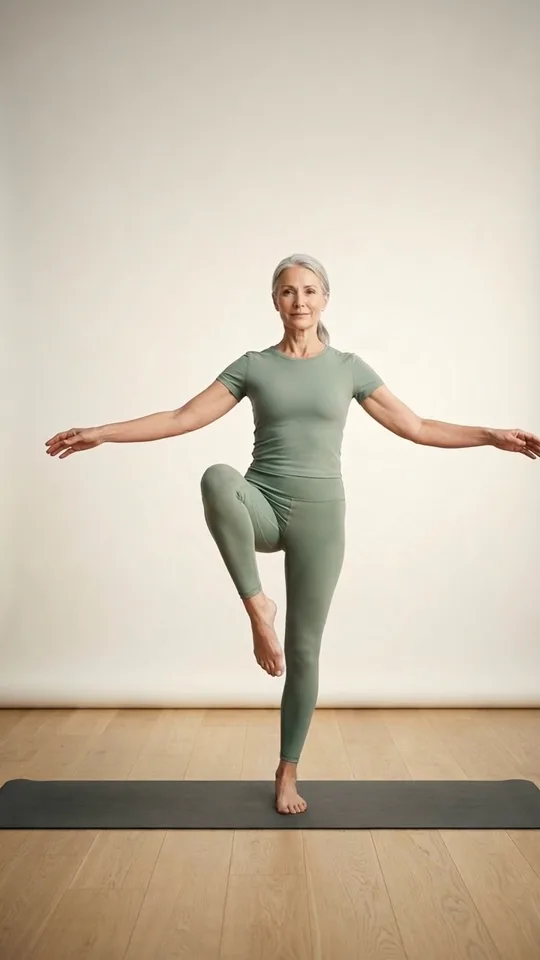
Single-Leg Balance
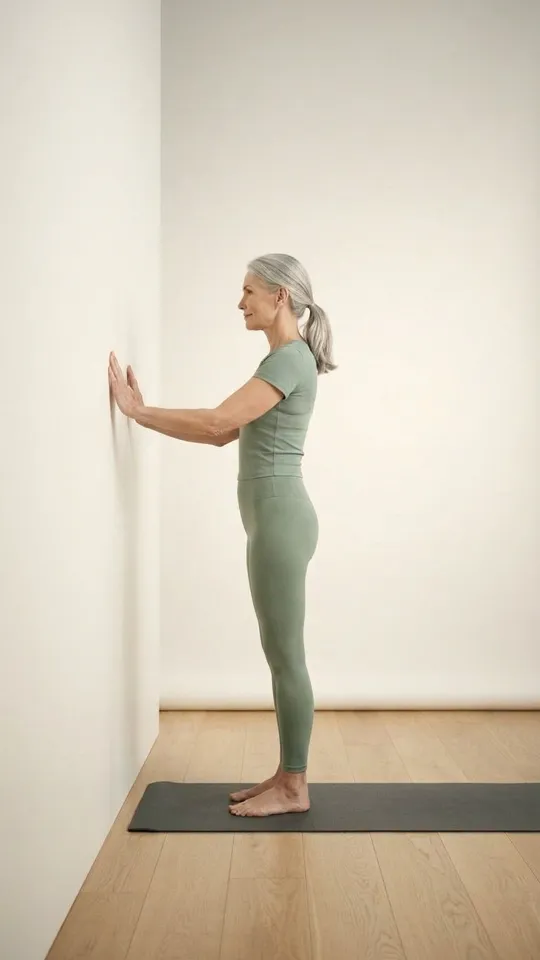
Heel Raises
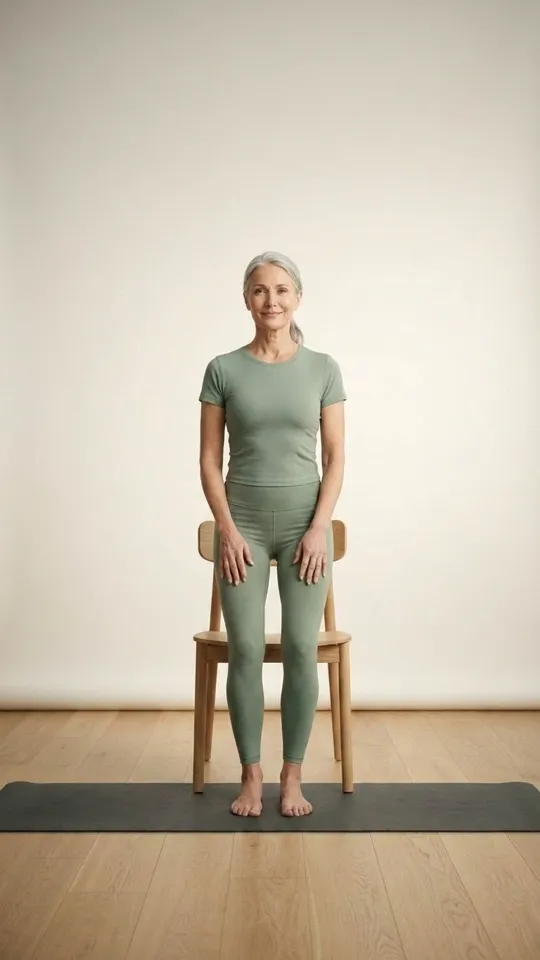
Sit-to-Stand
1. Single-leg stand
Hold the chair. Lift one foot a few inches off the floor and balance for 10 seconds, then switch. Work up to 30 seconds and to using just a fingertip for support.
2. Heel-to-toe stand (and walk)
Place one foot directly in front of the other, heel touching toe, and hold for 10 seconds. When ready, take slow heel-to-toe steps along the counter, like walking a tightrope.
3. Weight shifts
Stand with feet hip-width apart. Slowly shift your weight onto one foot, lightly lifting the other, then shift to the other side. Smooth and controlled, 10 each way.
4. Sit-to-stands
Rise from a chair and lower back down with control, hands free if you can. This builds the leg strength that balance depends on. Do 8 to 10.
5. Heel and toe raises
Holding the chair, rise onto your toes, then rock back onto your heels. This strengthens the ankles and feet that keep you steady. Do 10 to 12.
6. Clock reaches
Standing on one leg with support, reach the other foot forward (12 o'clock), to the side (3 o'clock), and behind (6 o'clock). It challenges balance in every direction. A few reaches per leg.
7. Marching in place
Hold your support and march, lifting each knee to a comfortable height. Great for warming up and for hip strength. March for 30 seconds.
How long should a 70-year-old be able to balance on one leg?
As a rough guide, many healthy adults in their 70s can balance on one leg for around 10 to 20 seconds, and being able to hold it for 10 seconds is often used as a reassuring marker. Do not worry if you are below that today — it is exactly what these exercises improve. Time yourself right here, then re-test every couple of weeks and watch your number grow.
One-leg balance timer
Hold a sturdy chair or counter. Lift one foot a few inches, start the timer, and stop when you need to put it down or grab support.
A self-check for general guidance, not a medical test. Always practice near support.
Build steadier feet for good
Balance fades quietly with inactivity and comes back with practice. Pair these moves with our ankle mobility exercises and the chair stand strength test, and keep the habit small and daily. For a guided plan that adapts to you, take the free quiz — there is a chair-first, fully supported option for every move.
Frequently asked questions
+ What is the number one balance exercise for seniors?
Standing on one leg (while holding a sturdy chair or counter) is the classic and most effective starting point. Practise a few seconds per side daily and build up as you get steadier.
+ How can a 70-year-old woman improve her balance?
Practise balance daily with supported moves — single-leg stands, heel-to-toe walking, and gentle weight shifts — near something you can hold. Strengthening the legs and ankles also makes a big difference, and improvement comes within weeks.
+ What are 5 exercises for balance?
Single-leg stands, heel-to-toe (tightrope) walking, sit-to-stands from a chair, heel and toe raises, and gentle side leg lifts. Always do them near a wall or chair for support.
+ Which exercise improves balance the most?
A mix works best, but single-leg standing and heel-to-toe walking challenge balance most directly. Pairing them with leg-strengthening moves like sit-to-stands gives the biggest gains.
Related guides



Find your perfect stretching routine
Take the 60-second quiz and get a guided routine matched to your body — free, in your browser.
Take the quiz