
Senior Mobility
Chair Exercises for Seniors: A Gentle 10-Minute Routine
Ten gentle chair exercises for seniors you can do at home in 10 minutes — no equipment, no floor work. Follow along, then grab the free printable PDF.
Written and reviewed by the StretchPartner team. Educational content only — not medical advice.
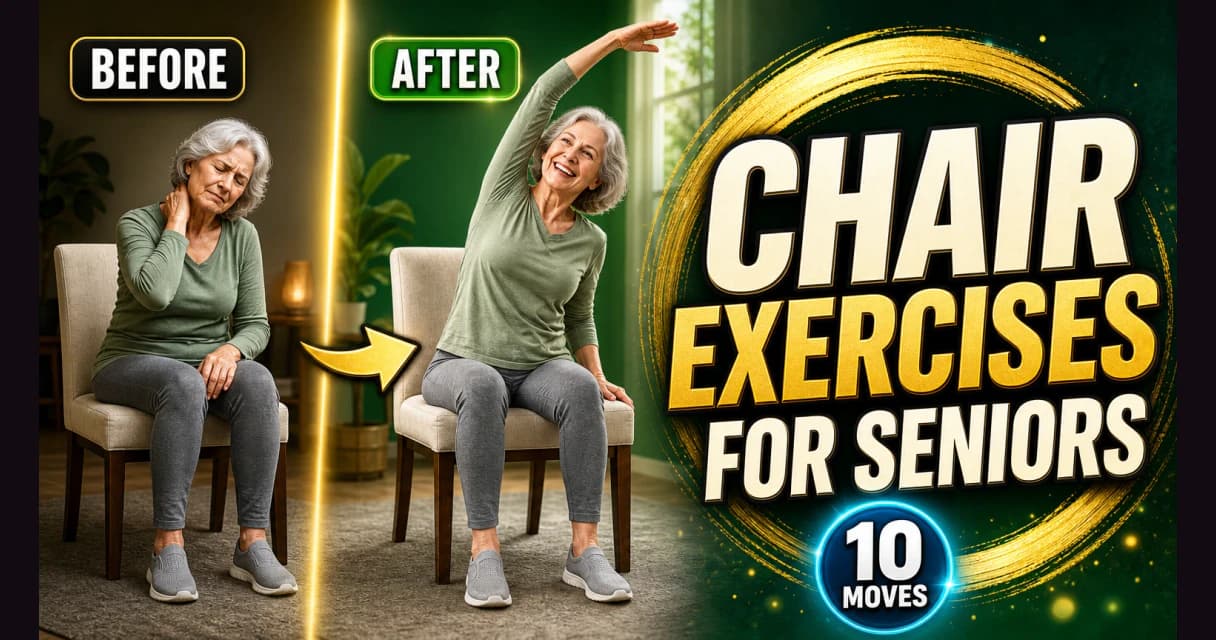
Chair exercises for seniors are one of the gentlest, safest ways to stay mobile, ease daily stiffness, and keep the strength that lets you get up, reach, and move with confidence. They are done sitting in (or holding onto) a sturdy chair — so there is no getting down on the floor, no equipment, and no jarring movement. If stiff hips, an achy back, or shaky balance have made you nervous about exercise, this is the place to start.
Below you will find a gentle 10-minute routine of 10 seated moves, plus a free printable version you can save as a PDF and keep by your chair.


Do chair exercises for seniors actually work?
Yes. You do not need to stand, sweat, or strain to get real benefit. Done a few minutes most days, gentle seated movement can improve flexibility and range of motion, ease the stiffness that builds up from sitting, support better posture and balance, and help you keep the everyday strength that getting out of a chair or off the floor depends on. The key is consistency, not intensity — five to ten easy minutes a day beats one hard session a week.
Who chair exercises are good for
Seated exercises are especially well suited to older adults who:
- Feel stiff or achy in the back, hips, knees, neck, or shoulders
- Have arthritis or joints that feel "rusty," especially in the morning
- Are recovering from a hip or knee replacement (with their doctor's okay)
- Worry about balance or feel unsteady on their feet
- Have not exercised in a while and want a calm, low-pressure way back in
Before you start: 4 quick safety tips
- Use a sturdy chair without wheels. Sit toward the front with both feet flat on the floor.
- Move slowly and only into an easy stretch. You should feel a gentle pull, never sharp pain.
- Breathe naturally through each move — never hold your breath.
- Stop and rest if you feel dizzy, short of breath, or any sharp or unusual pain. Check with your doctor before starting if you have a heart or joint condition.
10 gentle chair exercises for seniors
Work through these in order. Keep everything slow and comfortable — quality over quantity. Want a copy to follow along with? Grab the free printable chair exercise routine.
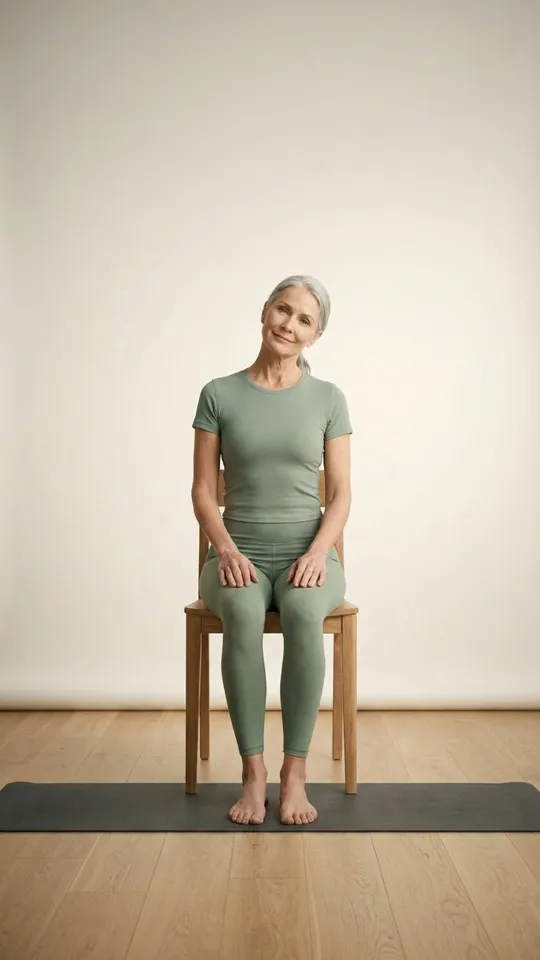
Neck Release
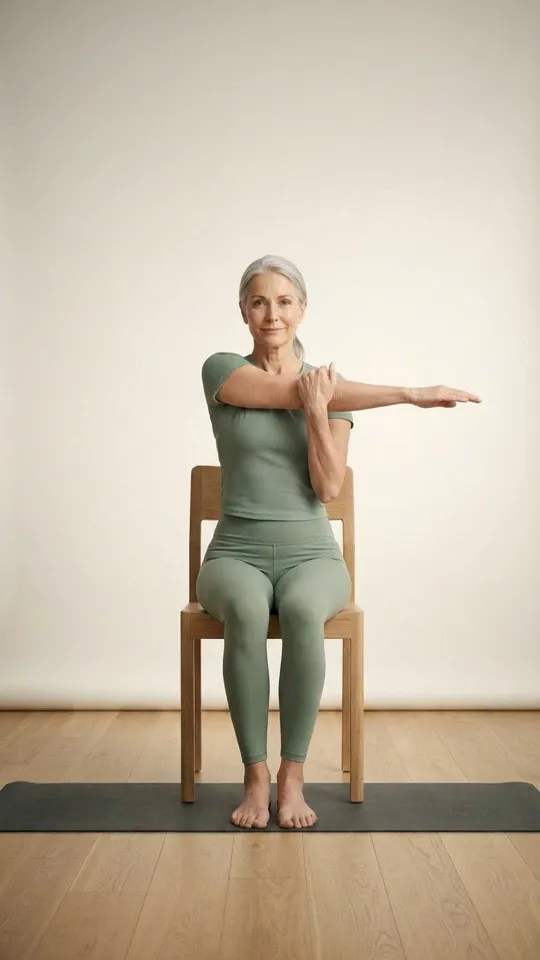
Cross-Body Shoulder Stretch
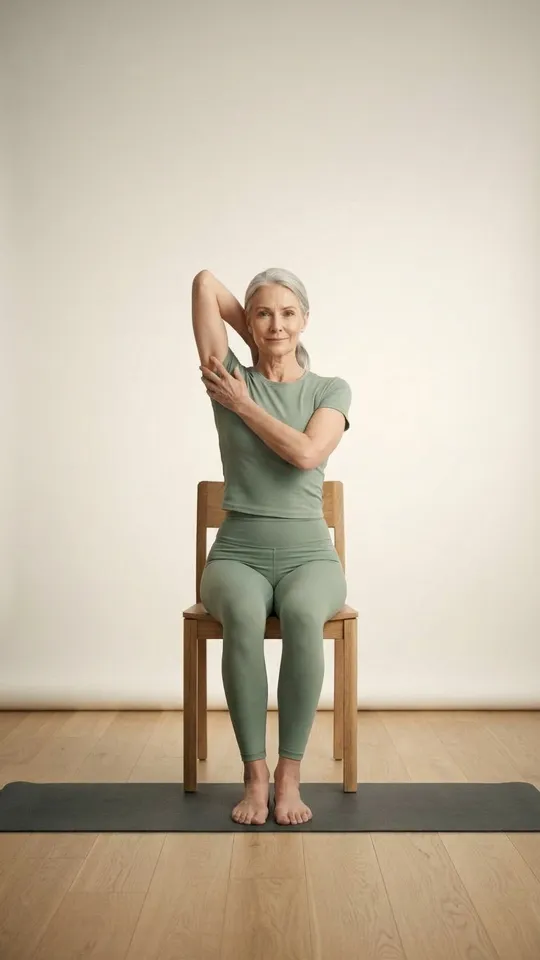
Overhead Triceps Stretch
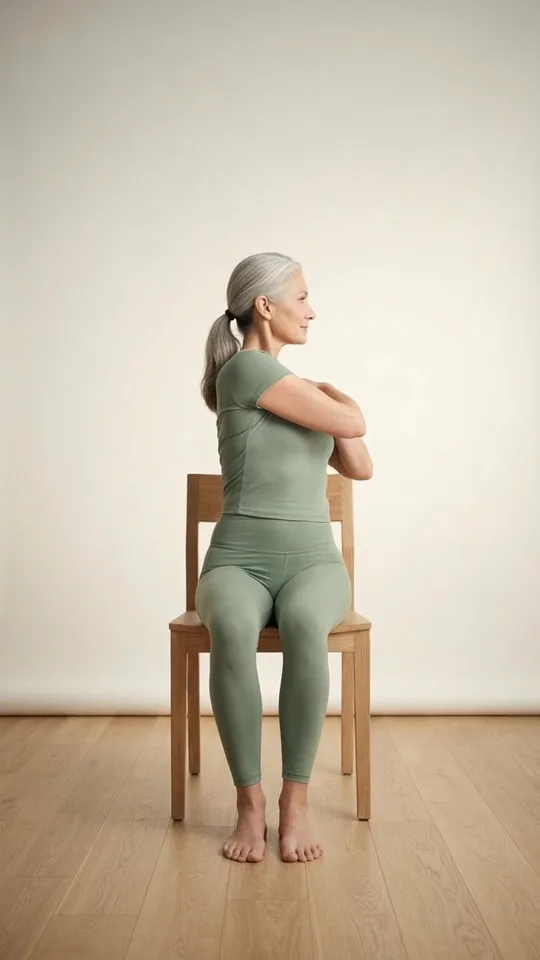
Seated Thoracic Rotation
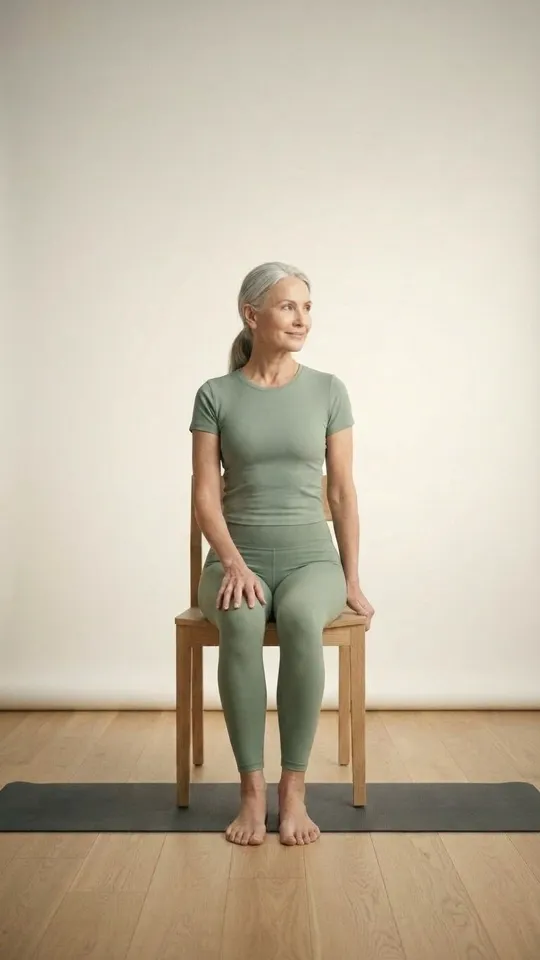
Seated Spinal Twist
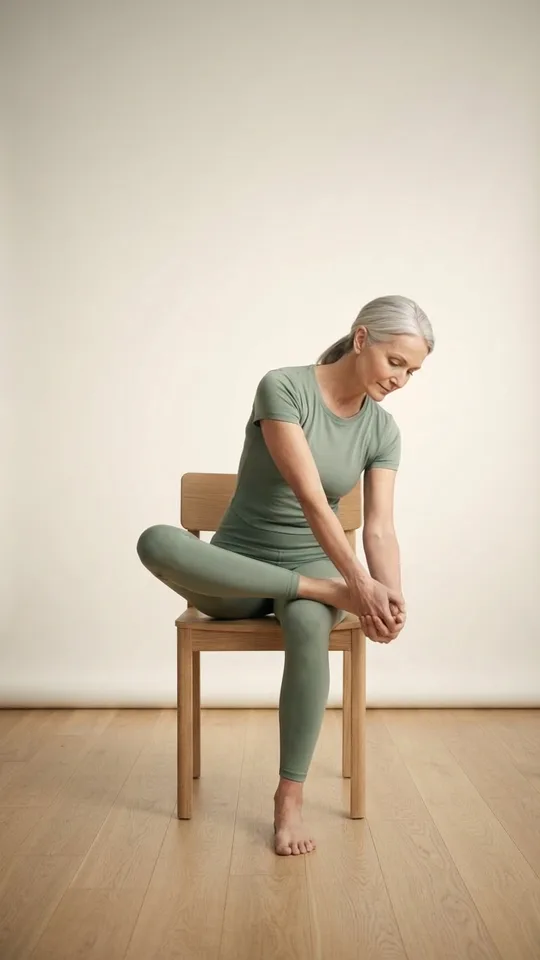
Seated Figure Four
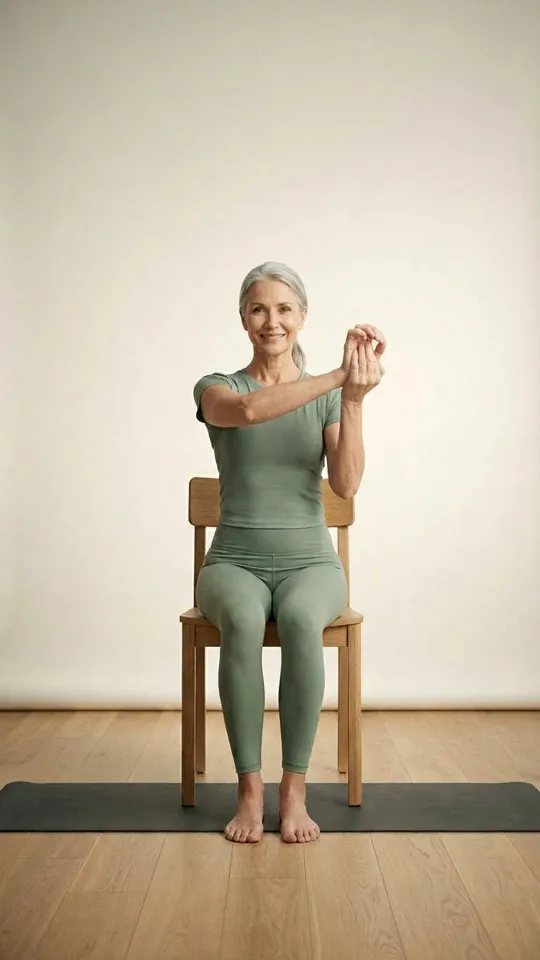
Wrist Flexor Stretch
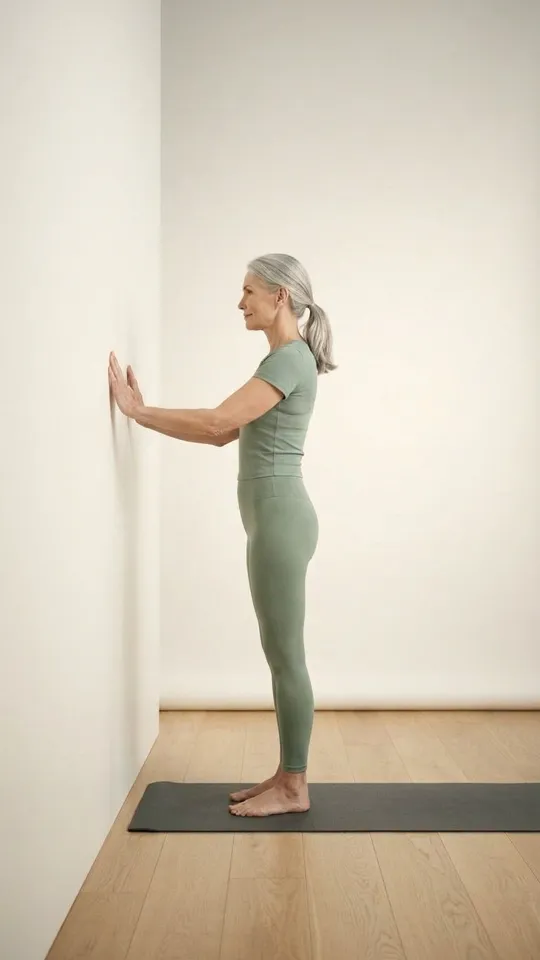
Heel Raises
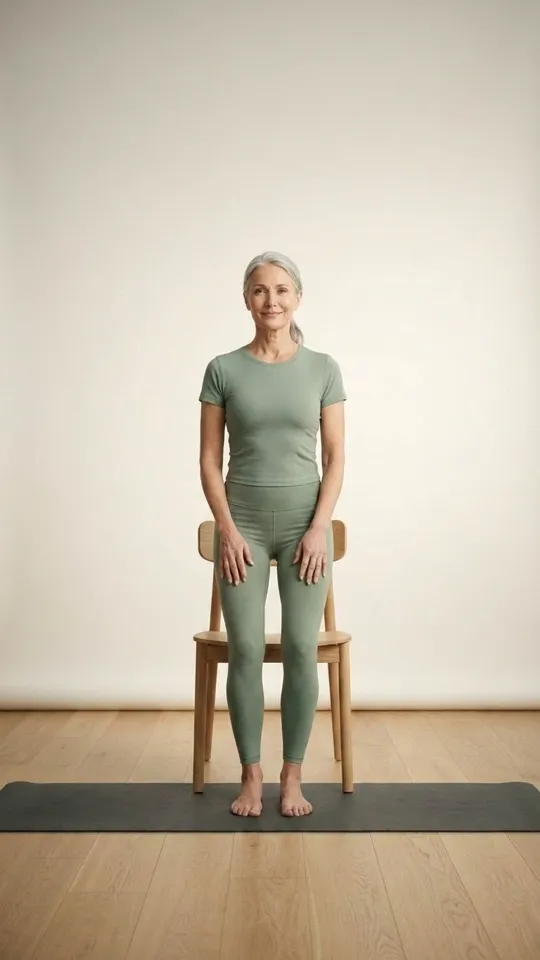
Sit-to-Stand
Hold timer — follow along
Press start when you’re settled.
1. Neck release (neck)
Sit tall. Let one ear drift gently toward that shoulder until you feel an easy stretch down the side of your neck. Keep both shoulders heavy and relaxed. Hold 20 seconds each side. For more, see our neck stretches for seniors.
2. Cross-body shoulder stretch (shoulders)
Bring one arm straight across your chest. Use your other hand to draw it a little closer. Keep your neck soft. Hold 20 seconds each arm.
3. Overhead triceps stretch (arms and shoulders)
Reach one arm up and let the hand drop behind your neck. Gently guide the elbow back with your other hand until you feel a stretch along the upper arm. Hold 20 seconds each side.
4. Seated thoracic rotation (upper back)
Cross your arms over your chest. Sit tall and slowly turn your upper body to one side, then the other, moving with your breath. Do 5 slow turns each way.
5. Seated spinal twist (back)
Place one hand on the opposite knee. Sit tall and gently twist toward the back of the chair, lengthening up through the spine as you turn. Hold 20 seconds each side. More options in our lower-back stretches.
6. Seated figure four (hips)
Cross one ankle over the opposite thigh so the knee opens out. Sit tall and hinge forward slightly from the hips until you feel a stretch in the outer hip. Hold 25 seconds each side. See more hip stretches for seniors.
7. Wrist flexor stretch (wrists and forearms)
Reach one arm out, palm up. With the other hand, gently draw the fingers back toward you until you feel an easy stretch in the forearm. Hold 20 seconds each hand.
8. Wrist extensor stretch (wrists and forearms)
Reach one arm out, palm down. Gently draw the knuckles toward you until you feel a stretch across the top of the forearm. Hold 20 seconds each hand.
9. Heel and toe raises (ankles and calves)
Sitting tall, lift your heels so you come up onto your toes, then rock back to lift your toes off the floor. Slow and steady wakes up the ankles and feet and supports steadier balance. Do 10 slow reps.
10. Sit-to-stand (legs and strength)
Sit toward the front of the chair, feet flat. Lean forward slightly and stand up, using the armrests only if you need them. Lower back down with control. This builds the exact strength that keeps you independent. Do 8 to 10 reps.
A 10-minute chair exercise routine
To turn the moves above into a simple 10-minute chair workout for seniors, go through them once in order, resting whenever you need to:
- Minutes 1–3 — Loosen up top: neck release, cross-body shoulder stretch, overhead triceps stretch.
- Minutes 4–6 — Free the spine and hips: seated thoracic rotation, seated spinal twist, seated figure four.
- Minutes 7–8 — Hands and forearms: wrist flexor and extensor stretches.
- Minutes 9–10 — Wake up legs and balance: heel and toe raises, then sit-to-stands.
Short on time? Even three or four of these moves count. The best routine is the one you will actually do.
How often should seniors do chair exercises?
Most older adults do well with a gentle session most days of the week — daily is ideal, but even a few times a week helps. Because these moves are low-impact, they are safe to do often. Listen to your body: a little gentle soreness is normal at first, sharp pain is not.
Free chair exercises and tools
Everything here is free. To make it stick, we built two free tools you can use right now, no sign-up needed:
- Free printable chair exercises (PDF) — print this routine and keep it by your chair.
- The 30-second chair stand test — a quick way to measure your leg strength and track your progress.
Want a routine built around your stiffest spots, with follow-along videos and a chair-first pace? Take the free 2-minute quiz and we will put one together for you — it works right in your browser, with no app to install.
Test your progress: the chair stand test
It helps to measure, not just guess. The chair stand test counts how many times you can stand up and sit down in 30 seconds — a simple, doctor-used check of the leg and hip strength that keeps you independent. Try it right here, do your chair exercises for a few weeks, then re-test. Watching your number climb is one of the most motivating things there is.
1. You are…
2. Your age
3. How many times did you stand up in 30 seconds?
Sit in a sturdy chair, arms crossed over your chest. Stand fully and sit fully as many times as you safely can in 30 seconds.
Frequently asked questions
Are chair exercises enough exercise for seniors?
For many older adults — especially those returning to movement, managing arthritis, or recovering from surgery — daily chair exercises are a genuinely effective foundation. As you feel stronger, you can add short walks and standing work. Start where you are; chair-friendly movement is a real and valuable form of exercise, not a lesser one.
Are there free chair exercises for seniors over 70 or over 80?
Yes. The routine on this page is gentle enough for the 70s, 80s, and beyond, and it is completely free. Move at your own pace, use the chair for support, and skip anything that does not feel right. The printable version is handy to keep nearby.
Is there a free chair exercise app for seniors?
StretchPartner is built exactly for this: gentle, chair-friendly routines designed for ages 55+, with large clear instructions and a chair-first option for every move. You can start free in your browser — there is no app to download to begin. Take the 2-minute quiz to get your personalized plan.
Can chair exercises help with stiffness in the morning?
They can. Morning stiffness is one of the most common reasons people start, and a few gentle seated moves are a kind way to loosen up before the day begins. See our morning stretches for seniors for a routine made for those first stiff minutes.
Frequently asked questions
+ Does the chair workout for seniors really work?
Yes. Chair exercises build real strength, mobility, and circulation while keeping you stable and supported, which is why they are widely used in senior fitness and rehab. Done a few times a week, they make everyday movement easier.
+ Are there free chair workouts for seniors?
Plenty — there are free videos online and free guided routines like StretchPartner that you can follow in your browser. Start with short 10-minute sessions and build up gradually.
+ Is there a free chair exercise app?
Yes. StretchPartner offers free chair-based routines you can follow on any device with no download, and several other apps include free trials. Pick one with clear, easy-to-follow video guidance.
+ How often should seniors do chair exercises?
Aim for most days of the week — even 10 minutes daily helps. A gentle mix of stretching and light strength work several times a week keeps joints mobile and muscles strong.
Related guides



Find your perfect stretching routine
Take the 60-second quiz and get a guided routine matched to your body — free, in your browser.
Take the quiz