
Senior Mobility
Gentle Sciatica Stretches for Seniors
Five gentle sciatica stretches for seniors to ease pain down the leg and free up tight hips and the lower back — mostly lying down or seated, with clear safety guidance.
Written and reviewed by the StretchPartner team. Educational content only — not medical advice.

Sciatica is that ache, burning, or zing that travels from the lower back or buttock down the back of the leg. It often flares when a tight muscle or stiff lower back presses on the sciatic nerve — and for many people, gentle, regular stretching of the hips and lower back calms it down. These sciatica stretches for seniors are mostly done lying down or seated, so they are easy on the body and easy to fit into the day.
The golden rule with sciatica: move gently and stay within a comfortable range. A little easing is good; sharp pain or symptoms shooting further down the leg means back off. For a routine matched to your tight spots, take the free 2-minute quiz.
 Before
 After
AfterWhat causes sciatica?
The sciatic nerve runs from the lower back, through the buttock, and down the leg. When the muscles around it — especially the deep glute (piriformis) and the lower back — get tight or the spine stiffens from sitting, the nerve can get irritated, sending pain, tingling, or numbness down the leg. Loosening those surrounding muscles often takes the pressure off and brings relief.
5 gentle sciatica stretches
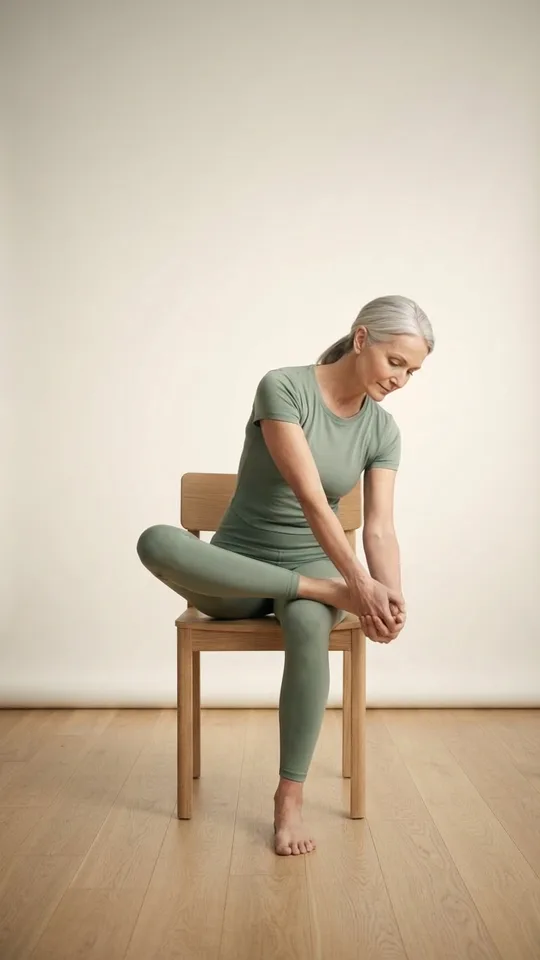
Seated Figure Four
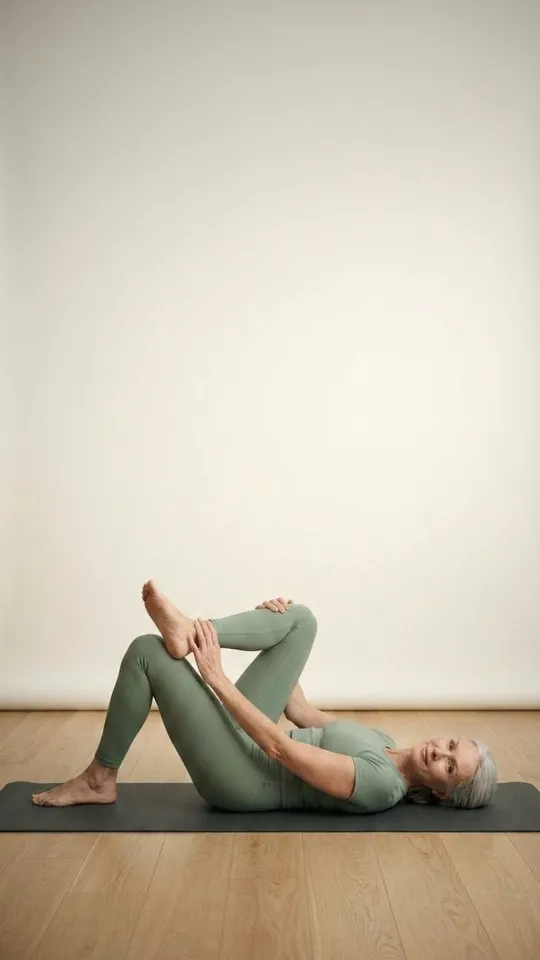
Pigeon Variation
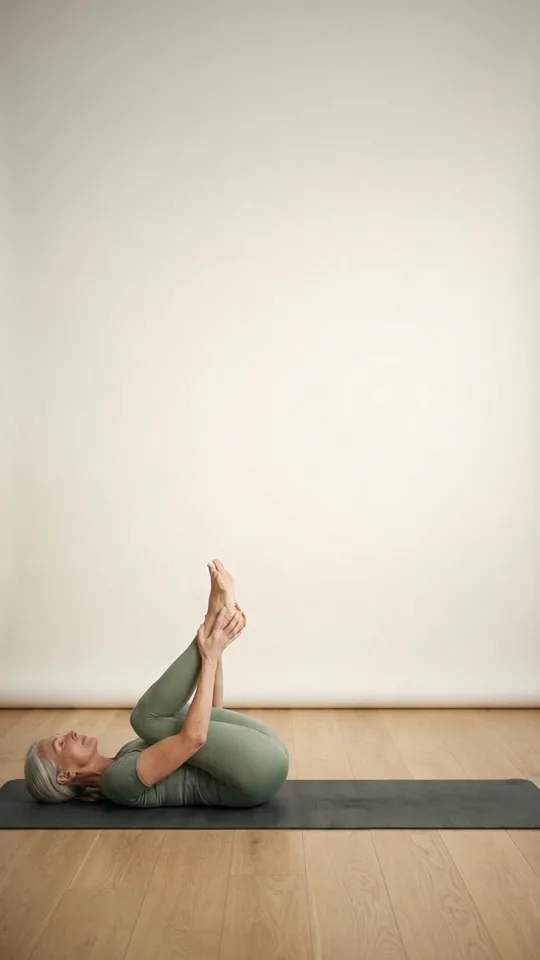
Knees to Chest
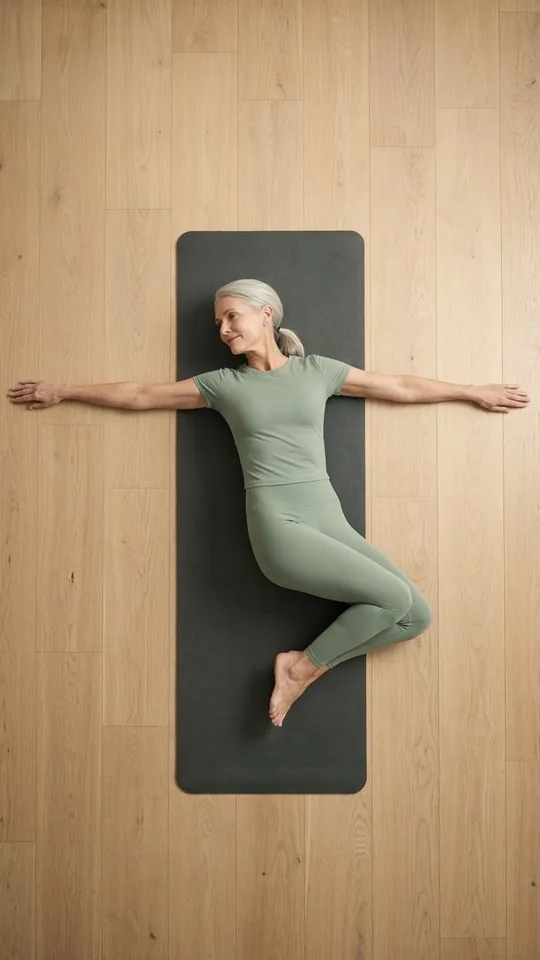
Supine Twist

Child's Pose Side Reach
Hold timer — ease in slowly, 30 seconds
Press start when you’re settled.
1. Seated figure-four (piriformis stretch)
Sit tall on a sturdy chair and cross one ankle over the opposite thigh so the lifted knee opens out to the side. Sit tall and hinge forward gently from the hips until you feel a stretch deep in the buttock. Hold 20 to 30 seconds each side. This piriformis stretch targets the deep glute muscle that so often irritates the sciatic nerve.
2. Reclined figure-four
Lie on your back, cross one ankle over the opposite thigh, then gently draw the bottom thigh toward your chest until you feel a stretch in the buttock of the crossed leg. The lying-down version takes balance and the back out of it entirely — a good choice on a flared-up day. Hold 20 to 30 seconds each side.
3. Knees to chest
Lie on your back and gently hug both knees in toward your chest, breathing into the lower back without forcing it. This decompresses and soothes a tight lower back. Hold 20 to 30 seconds, and try one knee at a time if both is too much.
4. Supine twist
Lie on your back, draw both knees up, and let them fall slowly to one side while keeping the opposite shoulder heavy on the floor. A gentle, supported rotation that eases the lower back and glutes. Hold 20 to 30 seconds each side — keep it well within comfort.
5. Child's pose side reach
From hands and knees, sink your hips back toward your heels, then walk both hands gently to one side to open the lower back and side ribs. A calming stretch to finish on. Hold 20 to 30 seconds each side. Skip it if kneeling bothers your knees.
How often should you do sciatica stretches?
Gently, once or twice a day, is plenty. Consistency matters more than intensity — short, frequent, pain-free sessions calm an irritated nerve better than one hard stretch. Warm up with a short walk first if you can.
Important: when to see a doctor
Stretching helps many cases of mild, muscular sciatica, but it is not a substitute for medical care. See a doctor promptly if you have severe or rapidly worsening pain, weakness in the leg or foot, numbness around the groin or inner thighs, or any loss of bladder or bowel control — these can signal a problem that needs urgent attention. And stop any stretch that sends pain further down the leg.
Related guides



For follow-along video and a hip-focused routine, browse the sciatica stretches collection, or get a personalized plan with the free 2-minute quiz.
Frequently asked questions
+ Can you fix sciatica by stretching?
Gentle stretching often relieves the symptoms of mild sciatica by easing pressure and muscle tension, and many people improve with it. It is not a guaranteed cure, though — persistent or worsening sciatica needs assessment by a doctor or physiotherapist.
+ What stretch gives instant sciatica relief?
Many people find quick relief from a gentle knee-to-chest stretch or a reclined figure-four (piriformis) stretch. Move slowly, stay within comfort, and stop if pain shoots down the leg.
+ What should you not do with sciatica?
Avoid heavy lifting, deep forward bends, prolonged sitting, and any stretch that sends sharp pain down your leg. Gentle movement is better than bed rest, but pushing through sharp pain makes things worse.
+ When should I see a doctor about sciatica?
See a doctor if the pain is severe, lasts more than a few weeks, or comes with leg weakness, numbness, or any loss of bladder or bowel control. These stretches are general wellbeing guidance, not a substitute for medical care.
Related guides


Find your perfect stretching routine
Take the 60-second quiz and get a guided routine matched to your body — free, in your browser.
Take the quiz