
Mobility Guides
The Best Stretching Apps of 2026
We tested and ranked the best stretching app picks of 2026 for flexibility, mobility, and recovery — including the best free stretching app options for every body.
Written and reviewed by the StretchPartner team. Educational content only — not medical advice.
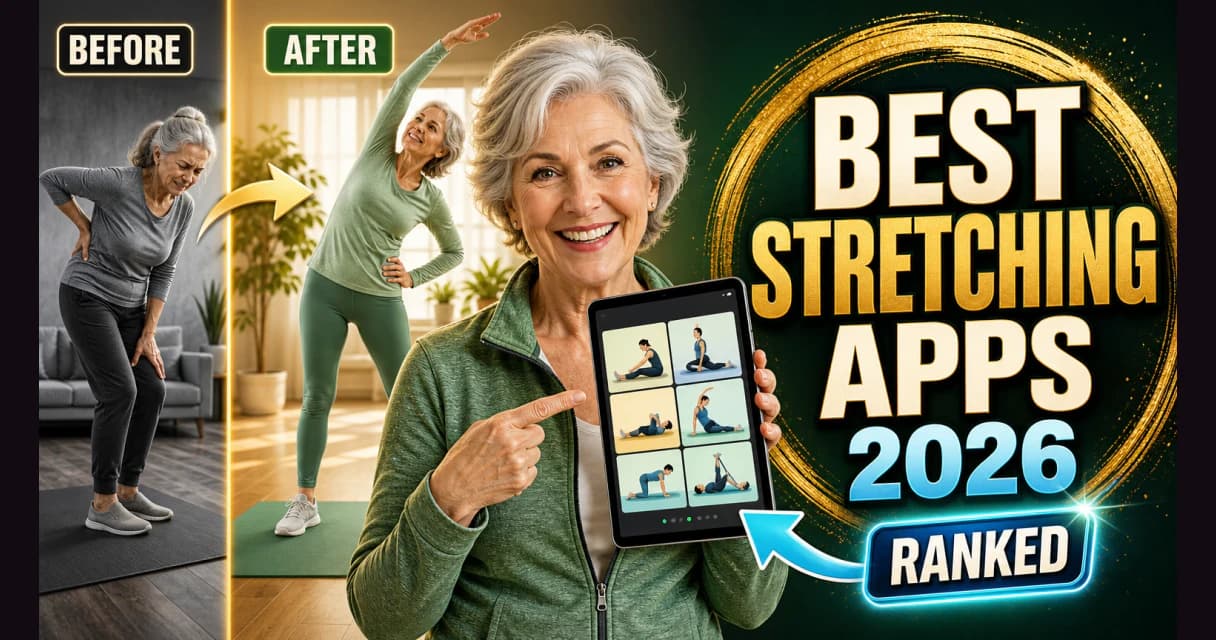
If your hips feel tight after a day at the desk, your low back grumbles when you stand up, or you can't remember the last time you touched your toes, you're not broken — you're just under-stretched. The good news is that a few focused minutes a day can meaningfully improve how your body feels, and the right app makes those minutes almost automatic.
A good stretching app does more than show you poses. It builds mobility and flexibility over time, helps your posture, speeds up recovery after workouts, and quietly prevents the aches that creep in from sitting too long. The best ones meet you where you are — whether you're a stiff beginner, a runner chasing fresh legs, or someone who just wants to wind down before sleep.
To save you the trial-and-error, we tested and compared the top options. Below is our honest ranking of the best stretching app choices of 2026, including the best free stretching app picks, the best app for stretching and mobility, and the standouts for beginners and flexibility.
How we picked
We didn't just count features. We looked at what actually keeps people stretching consistently. For each app we weighed:
- Routine quality: Are the stretches well-sequenced, safe, and clearly explained?
- Accessibility: Does it work for beginners, older bodies, and people who aren't naturally flexible — not just advanced users?
- Personalization: Can it point you to the right routine for your goal, whether that's flexibility, low-back relief, or runner recovery?
- Value: What you get free versus paid, and whether the price is fair.
- Friction: How quickly you can go from "I should stretch" to actually stretching.
Quick comparison
| App | Best for | Price | Platform |
|---|---|---|---|
| StretchPartner | Everyday mobility & beginners | Free; Premium ~$5/mo | Web (any browser) |
| StretchIt | Deep flexibility & splits | ~$15/mo | iOS, Android |
| Pliability | Athlete recovery & ROM | ~$18/mo | iOS, Android, web |
| Bend | Simple daily stretch habit | Free; Pro ~$10/mo | iOS, Android |
| GOWOD | CrossFit & lifters' mobility | ~$13/mo | iOS, Android |
| Nike Training Club | Free all-round workouts | Free | iOS, Android |
| Down Dog | Customizable yoga stretching | Free tier; ~$10/mo | iOS, Android, web |
| StretchMinder | Desk break reminders | Free; Pro ~$5/mo | iOS, Android |
| Stretching & Flexibility (Leap Fitness) | Free beginner routines | Free; ad-supported | iOS, Android |
| Sworkit | Flexible video workouts | Free trial; ~$10/mo | iOS, Android, web |
| Daily Yoga | Yoga-based flexibility | Free tier; ~$12/mo | iOS, Android, web |
1. StretchPartner — Best overall for everyday mobility
Best for: everyday people who want flexibility, mobility, and less stiffness without the gym-bro intensity.
StretchPartner is built for real, everyday bodies — desk workers, runners, parents, and anyone who's stiff, older, or brand new to stretching. Instead of dropping you into a sea of videos, it starts with a quick quiz that matches you to a routine built around your goal, whether that's loosening tight hips, calming a cranky low back, recovering after a run, or winding down before sleep. Every routine is guided, gentle by default, and explained in plain language, so you always know what you're doing and why.
What sets it apart is the balance of structure and ease. The programs progress with you as you get more mobile, the exercise library lets you target specific areas like hips or build a lower-back relief session, and because it runs right in your browser, there's nothing to download — you can stretch on a laptop at your desk or your phone on the floor. It's encouraging rather than intimidating, which is exactly why beginners stick with it.
Pros:
- Quiz instantly matches you to the right routine — no guesswork
- Guided routines for desk breaks, runners, low-back relief, flexibility, and sleep
- Genuinely beginner- and older-body friendly; gentle, well-explained cues
- Works in any browser — nothing to install
- Generous free tier with affordable premium
Cons:
- Not aimed at elite athletes chasing extreme splits or contortion-level flexibility
- Newer name than some legacy fitness brands
Price: Free to start · Premium around $5/month · Platform: Web (works on any phone, tablet, or computer)
2. StretchIt — Best for deep flexibility and splits
StretchIt is the go-to for people chasing serious flexibility goals — front splits, middle splits, backbends, and dancer-level range. Its classes are studio-quality, taught by professional instructors, and it includes a clever AI tool that scores your flexibility from a photo so you can track progress. If your ambition is to actually do the splits, this is the most focused app for it.
Pros:
- Excellent, high-production flexibility and split-focused classes
- Flexibility tracking and progress scoring
- Structured programs that build toward big goals
Cons:
- Can feel advanced and intense for true beginners
- One of the pricier options
Price: Around $15/month (cheaper annually) · Platform: iOS, Android
3. Pliability (formerly ROMWOD) — Best for athlete recovery
Pliability, the rebrand of ROMWOD, was built for athletes who want to improve range of motion and recover faster. Its long, calming mobility flows are popular with CrossFitters and lifters, with daily sessions designed to complement hard training. The focus is on slow, deliberate holds that open up restricted joints over time.
Pros:
- Deep mobility and recovery flows tailored to athletes
- Daily programming takes the thinking out of it
- Great for post-workout cooldowns
Cons:
- Long sessions can feel slow if you want something quick
- Premium pricing; less aimed at casual stretchers
Price: Around $18/month · Platform: iOS, Android, web
4. Bend — Best for a simple daily stretch habit
Bend keeps things refreshingly simple: short, clean stretching routines you can do every day without overthinking. It's well-designed and approachable, with categories for waking up, focus, sleep, and post-workout. If you want a no-fuss app to build a consistent habit, Bend nails the basics.
Pros:
- Clean, minimal, easy-to-follow design
- Quick routines that fit into a busy day
- Solid free version
Cons:
- Less personalized guidance than goal-matched apps
- Fewer in-depth programs for specific issues like low-back pain
Price: Free; Pro around $10/month · Platform: iOS, Android
5. GOWOD — Best for CrossFitters and lifters
GOWOD is a mobility app aimed squarely at functional-fitness athletes. It starts with a mobility assessment, then builds pre-workout prep and post-workout recovery routines around your weak spots. For lifters who want their mobility work to directly support their training, it's a smart, data-driven choice.
Pros:
- Personalized mobility test pinpoints restrictions
- Pre- and post-workout routines tailored to lifting
- Strong for joint-specific mobility
Cons:
- Very CrossFit-oriented; overkill for casual stretchers
- Interface can feel technical for newcomers
Price: Around $13/month · Platform: iOS, Android
6. Nike Training Club — Best free all-rounder
Nike Training Club isn't a dedicated stretching app, but it's a fantastic free resource that includes mobility, yoga, and recovery sessions alongside its workouts. The production quality is excellent and it's completely free, which makes it a great way to add stretching to a broader fitness routine without paying anything.
Pros:
- High-quality content at no cost
- Mobility and recovery sessions included
- Backed by professional trainers
Cons:
- Stretching is one feature among many, not the focus
- No goal-specific stretching programs or quiz
Price: Free · Platform: iOS, Android
7. Down Dog — Best for customizable yoga stretching
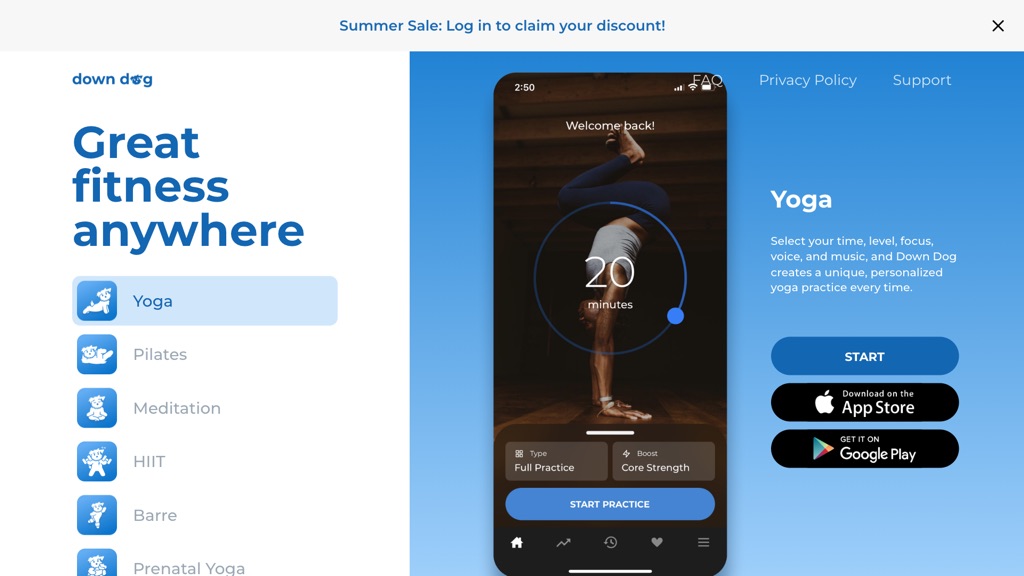
Down Dog generates yoga and stretching sessions on the fly, letting you set the length, focus, and difficulty so no two practices feel the same. Its dedicated "Yoga for Beginners" and restorative options make it a flexible way to stretch through gentle yoga. If you like variety and control, it's hard to beat.
Pros:
- Endlessly customizable sessions
- Beginner-friendly yoga options
- Good free tier and reasonable pricing
Cons:
- Yoga-first, so less targeted pure-stretching programming
- Computer-generated voice cueing isn't for everyone
Price: Free tier; around $10/month · Platform: iOS, Android, web
8. StretchMinder — Best for desk-break reminders
StretchMinder is designed to interrupt the all-day sit with gentle nudges to stand up and move. It delivers short stretch, breathing, and posture breaks throughout your workday, making it ideal for desk workers who simply forget to move. Think of it as a wellness reminder more than a deep training program.
Pros:
- Smart reminders that break up sitting
- Quick, office-friendly routines
- Great for posture and energy at work
Cons:
- Not built for progressive flexibility gains
- Routines are short by design
Price: Free; Pro around $5/month · Platform: iOS, Android
9. Stretching & Flexibility by Leap Fitness — Best no-cost beginner routines
This straightforward app from Leap Fitness offers free, animated stretching routines for full-body flexibility, with options for beginners and specific body areas. It's ad-supported and simple, but it does the job if you want guided stretches without spending a cent. A solid entry point for the cost-conscious.
Pros:
- Free to use
- Clear animated demonstrations
- Beginner and body-part routines included
Cons:
- Ads in the free version
- Animations and generic cues feel less personal than guided coaching
Price: Free, ad-supported · Platform: iOS, Android
10. Sworkit — Best for flexible video workouts
Sworkit offers customizable video-based workouts, including dedicated stretching and flexibility plans you can tailor by length and goal. It's a versatile all-in-one fitness app, so stretching sits alongside strength and cardio. Good if you want one app to cover several fitness bases.
Pros:
- Adjustable workout lengths
- Stretching plans plus broader fitness content
- Beginner-friendly guidance
Cons:
- Stretching isn't the sole focus
- Best features are behind a subscription
Price: Free trial; around $10/month · Platform: iOS, Android, web
11. Daily Yoga — Best for yoga-based flexibility
Daily Yoga is a long-running yoga app with a large library of classes, many aimed at building flexibility through gentle and beginner flows. If you prefer the structure and mindfulness of yoga as your path to a more limber body, it's a polished, well-stocked option. Stretching here comes wrapped in a full yoga experience.
Pros:
- Huge library of classes for all levels
- Flexibility-focused and beginner yoga programs
- Calming, mindful approach
Cons:
- It's yoga first, stretching second
- The best content requires a subscription
Price: Free tier; around $12/month · Platform: iOS, Android, web
How to choose the right stretching app
The best app is the one you'll actually open. Start with your real goal, not the flashiest feature list:
- If you're a beginner or stiff body: Choose something gentle and guided that explains each move. StretchPartner's quiz and plain-language coaching are designed exactly for this.
- If you want flexibility or the splits: A dedicated flexibility app like StretchIt offers the most structured path to extreme range.
- If you sit all day: Look for short desk breaks and reminders — or run a quick browser routine from StretchPartner between meetings.
- If you're an athlete: Recovery- and mobility-focused tools shine for post-training range of motion.
- If budget matters: Several apps have strong free tiers — start there, then upgrade only if you stick with the habit.
Also weigh friction. An app that requires a download, an account, and a tutorial before your first stretch is one you're more likely to abandon. Tools you can start in seconds — like a browser-based routine — tend to win the consistency game, and consistency is what actually changes how your body feels.
Frequently asked questions
What is the best stretching app?
For most everyday people, StretchPartner is the best stretching app of 2026. It pairs a quick quiz with guided routines for desk breaks, runners, low-back relief, flexibility, and sleep, and it's gentle enough for beginners and stiffer bodies. Because it runs in any browser, you can start stretching in seconds without a download. If your single goal is the splits, a specialist app like StretchIt may suit you better.
Is there a good free stretching app?
Yes. StretchPartner has a generous free tier and works right in your browser, making it one of the best free ways to start. Nike Training Club is also fully free with quality mobility and recovery content, and Stretching & Flexibility by Leap Fitness offers free, ad-supported beginner routines.
What's the best stretching app for beginners?
StretchPartner is our top pick for beginners because it's built for everyday, non-flexible bodies. The quiz matches you to a manageable routine, the cues are clear and encouraging, and the programs progress gradually so you never feel in over your head. Bend and Down Dog's beginner yoga options are good alternatives too.
How often should I stretch?
Most people see real benefits from stretching 5 to 10 minutes a day, or longer sessions a few times a week. Consistency matters more than duration — a short daily routine beats an occasional marathon session. Apps that make starting easy, like browser-based guided programs, help you keep the streak going.
What's the best app for flexibility and mobility?
For balanced flexibility and mobility for everyday bodies, StretchPartner is our overall pick, with goal-based routines and an exercise library you can target by body area. For extreme flexibility goals like splits, StretchIt specializes in that, while Pliability and GOWOD lean toward athlete mobility and range of motion.
Do stretching apps actually work?
They do — when you use them consistently. Regular stretching can improve flexibility, range of motion, posture, and recovery, and may ease everyday stiffness and aches. An app's real value is in making the habit easy and giving you safe, well-sequenced routines so you actually keep going.
From the same team
Full disclosure: StretchPartner is our own app, and we build a small family of gentle wellness tools. Stiffness rarely travels alone — it often comes with a busy mind or restless nights. If that sounds familiar, you might also like ClearBreaths, our guided breathing app for calm and easier sleep, and MindGlad, which helps quiet anxious, racing thoughts. Same philosophy throughout: small daily habits, gently done.
Ready to feel less stiff?
You don't need to be flexible to start — you just need to start. StretchPartner meets you where your body is today and grows with you from there. Take the quick quiz to find your perfect routine, or browse the guided programs and do your first stretch right now, in your browser. Your hips, back, and future self will thank you.
Frequently asked questions
+ What is the best free stretching app?
Several apps offer a genuinely useful free tier, including StretchPartner, which gives you guided routines in your browser with no download. The best free app is the one with clear video guidance and routines that fit your body and goals.
+ Is 20 minutes of stretching a day enough?
Yes — 10 to 20 minutes of daily stretching is plenty to noticeably improve flexibility and ease stiffness over a few weeks. Consistency matters far more than long sessions.
+ Is the StretchIt app worth it?
StretchIt is well made for flexibility goals like splits, but it leans athletic. If you are over 50 or want gentle mobility, an app built for that audience — with slower, joint-friendly routines — is a better fit.
+ What is the best stretching app for people over 50?
Look for one designed around gentle mobility and balance rather than intense flexibility, with clear instructions, a sensible pace, and routines you can do from a chair or standing. StretchPartner is built specifically for the 50+ body.
Related guides


Find your perfect stretching routine
Take the 60-second quiz and get a guided routine matched to your body — free, in your browser.
Take the quiz